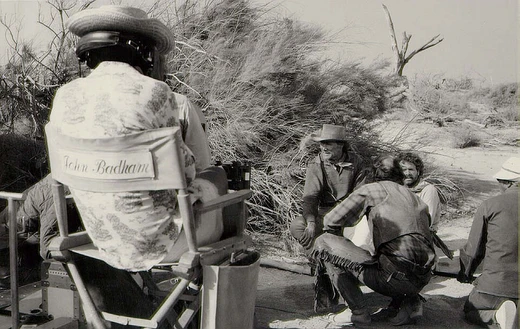
Éric Rohmer
Last established French New Wave director and Cahiers editor.
Éric Rohmer was a French film director, critic, journalist, novelist, screenwriter, and teacher. He was the last of the post-World War II French New Wave directors to become established, editing the influential film journal Cahiers du cinéma from 1957 to 1963 while his colleagues transitioned to filmmaking. Rohmer gained international acclaim around 1969 with his film My Night at Maud's, which was nominated at the Academy Awards, and he won the Golden Lion at the Venice Film Festival for The Green Ray in 1986.
- born
- 21 March 1920
- died
- 11 January 2010
- field
- Film director, film critic, journalist, novelist, screenwriter, teacher
- nationality
- French
- known_for
- Six Moral Tales, editing Cahiers du cinéma, French New Wave
Lore & Background
Rohmer was born Jean-Marie Maurice Schérer (or Maurice Henri Joseph Schérer) in Nancy (also listed as Tulle), France, the son of Mathilde and Lucien Schérer. He was a Catholic and secretive about his private life, often giving different dates of birth to reporters. He fashioned his pseudonym from the names of Erich von Stroheim and Sax Rohmer. Educated in Paris, he received an advanced degree in history and also studied literature, philosophy, and theology.
Rohmer first worked as a teacher in Clermont-Ferrand, then moved to Paris in the mid-1940s as a freelance journalist. In 1946 he published a novel, Elisabeth, under the pen name Gilbert Cordier. He began attending screenings at Henri Langlois's Cinémathèque Française, meeting Jean-Luc Godard, François Truffaut, Claude Chabrol, Jacques Rivette, and others. Around 1949 he switched from journalism to film criticism, writing for Révue du Cinéma, Arts, Temps Modernes, and La Parisienne. In 1950 he co-founded La Gazette du Cinéma with Rivette and Godard, and in 1951 joined Cahiers du Cinéma, becoming its editor in 1956. He published articles under his real name until 1955, when he began using 'Éric Rohmer' so his family would not know of his film involvement.
Rohmer's best-known article was 'Le Celluloïd et le marbre' (1955), examining film's relationship with other arts. In 1957 he co-wrote the first book-length study of Alfred Hitchcock with Chabrol, focusing on Hitchcock's Catholic background. By 1963, Rohmer resigned from Cahiers due to disagreements with left-wing critics. He co-founded the production company Les Films du Losange with Barbet Schroeder in 1962, which produced all his work except his last three features. His career gained momentum with the Six Moral Tales cycle, beginning with The Bakery Girl of Monceau (1963) and Suzanne's Career (1963).
Reader's Guide
Éric Rohmer's significance lies in his dual role as a critic and filmmaker who shaped the French New Wave. As editor of Cahiers du cinéma from 1957 to 1963, he established a distinctive rhetorical style and influenced the magazine's direction, notably through his conservative political stance and admiration for American cinema. His co-authored book on Alfred Hitchcock helped establish auteur theory as a critical method. Rohmer's film career, particularly the Six Moral Tales cycle, explored variations on a single storyline—a man tempted by a second woman but returning to the first—focusing on characters' internal analysis rather than action. He gained international acclaim with My Night at Maud's (1969) and won major festival awards, including the Golden Lion for The Green Ray (1986) and a Career Golden Lion in 2001. After his death in 2010, The Daily Telegraph called him 'the most durable filmmaker of the French New Wave,' noting he outlasted peers and continued making films the public wanted to see late in his career. His legacy includes influencing film criticism and narrative structure through his moral tales.
Did You Know?
- Rohmer fashioned his pseudonym from the names of actor/director Erich von Stroheim and writer Sax Rohmer.
- He co-wrote the earliest book-length study of Alfred Hitchcock with Claude Chabrol in 1957.
- Rohmer was secretive about his private life and often gave different dates of birth to reporters.
- He co-founded the production company Les Films du Losange with Barbet Schroeder in 1962.
More in Film Directors 1-24
Spotted an error? Know more?
This is a living reference — every entry is fact-audited, and reader corrections feed straight into our audit queue. Suggest an edit · See this site's audit record